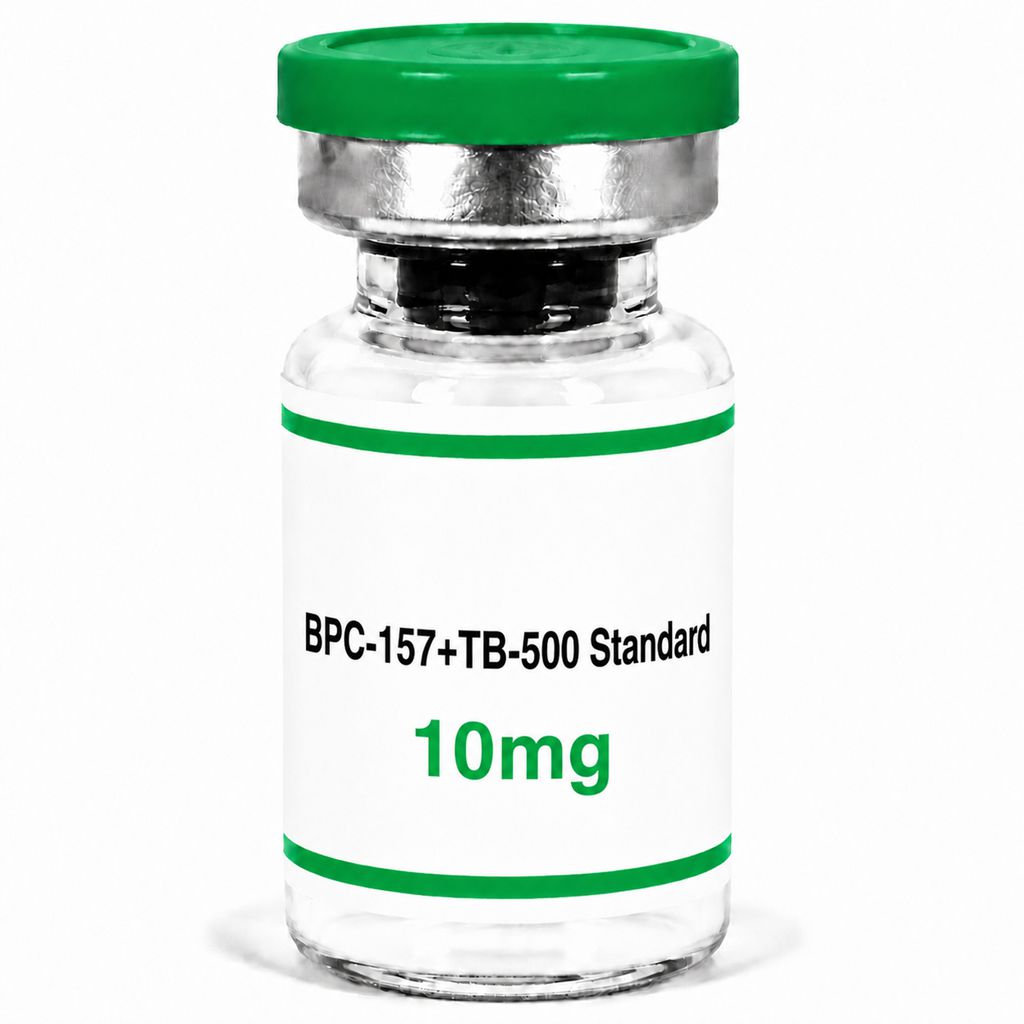
BPC-157 + TB-500: Synergistic Peptide Blend for Advanced Tissue Research
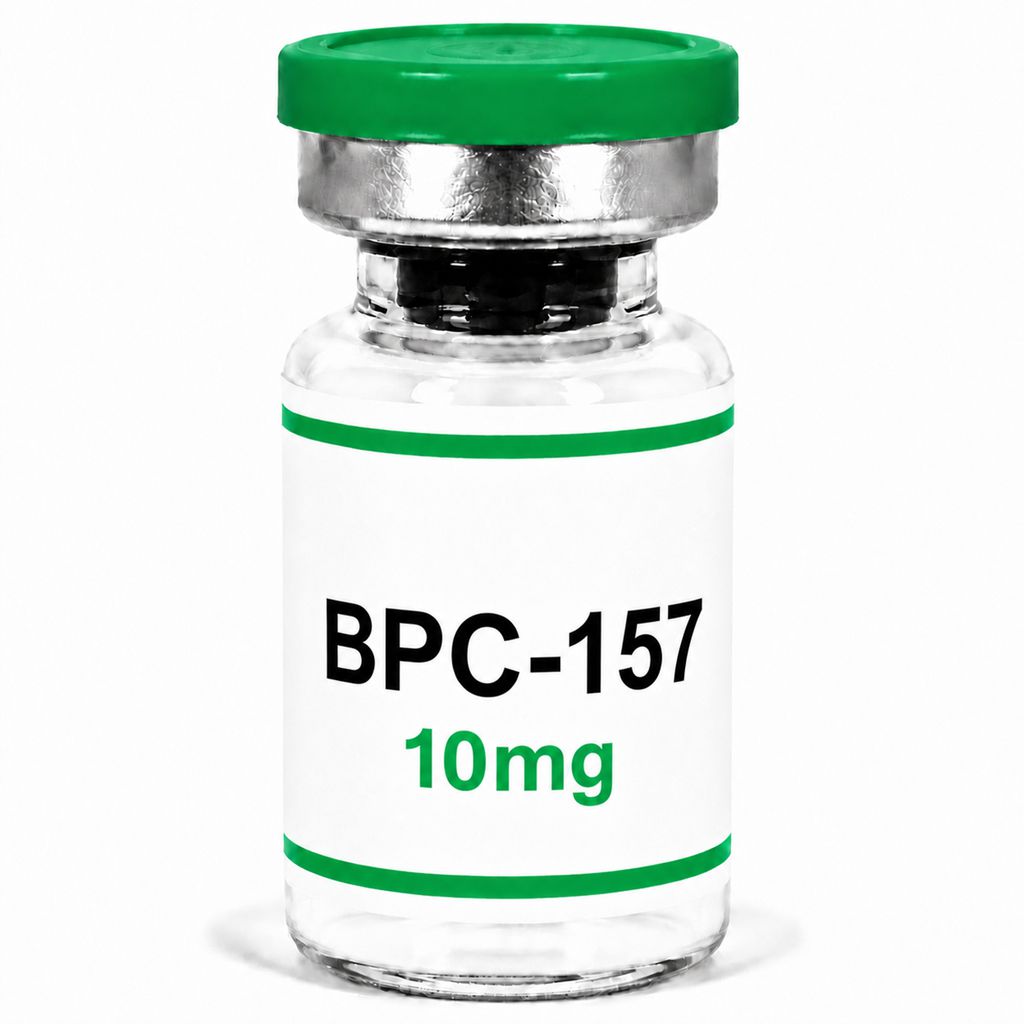
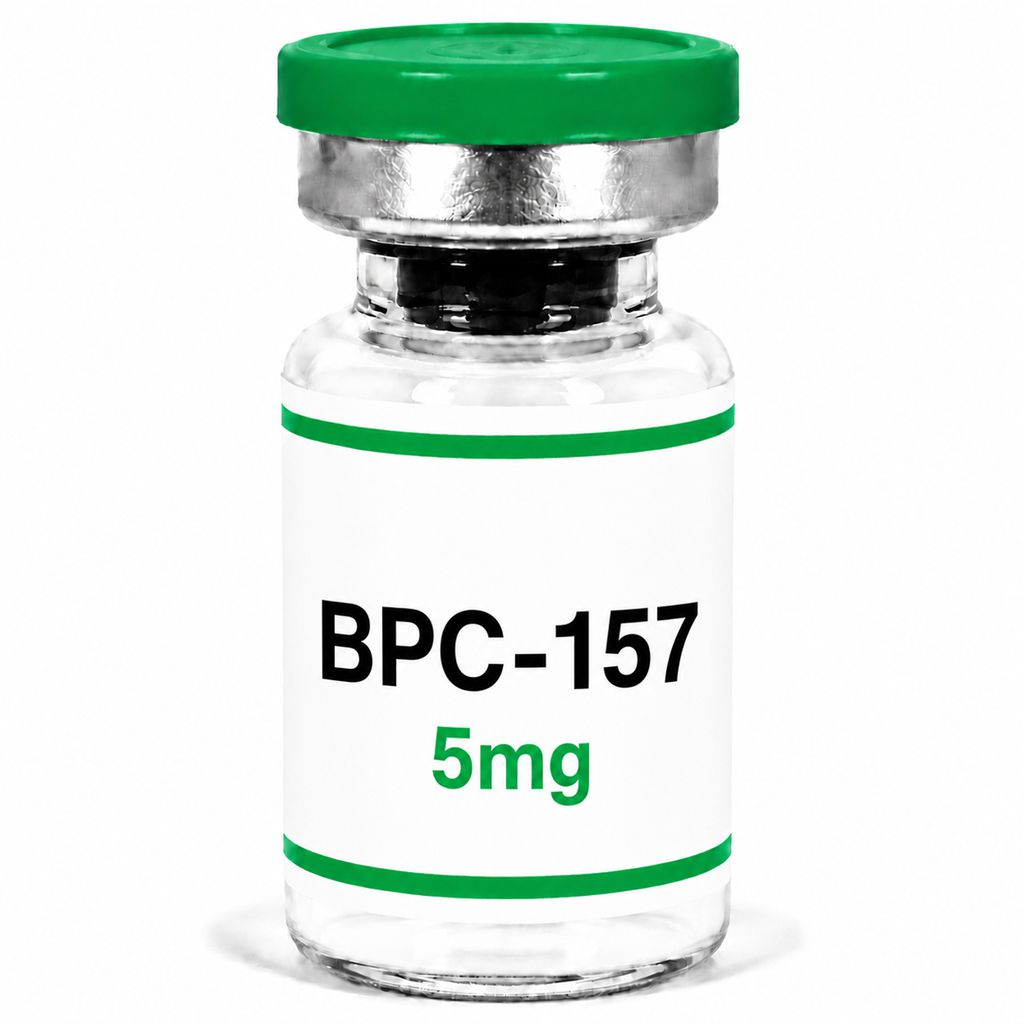
This research-grade peptide combination brings together two extensively studied compounds in regenerative biology: BPC-157 (Body Protection Compound-157, a synthetic gastric pentadecapeptide) and TB-500 (Thymosin Beta-4 fragment, a naturally occurring peptide). This blend is designed for laboratory research applications only.
Individual Compound Profiles
BPC-157 (Body Protection Compound-157)
- Molecular Formula: C₆₂H₉₈N₁₆O₂₂
- Molecular Weight: 1419.53 g/mol
- CAS Number: 137525-51-0
- Sequence: Gly-Glu-Pro-Pro-Pro-Gly-Lys-Pro-Ala-Asp-Asp-Ala-Gly-Leu-Val
- Research Focus: Gastric mucosal protection, angiogenesis modulation, tendon-bone healing
TB-500 (Thymosin Beta-4 Fragment)
- Molecular Formula: C₂₁₂H₃₅₀N₅₆O₇₈S
- Molecular Weight: 4963.44 g/mol
- CAS Number: 77591-33-4
- Active Region: Actin-binding domain (17-23 amino acids)
- Research Focus: Cell migration, wound healing, tissue remodeling
Research Applications & Mechanisms
Tissue Repair & Regeneration Research
- Wound Healing Models: Investigate epithelial migration, granulation tissue formation, and wound closure rates in vitro/in vivo models (published studies show 40-60% faster healing in animal models)
- Collagen Synthesis: Study effects on Type I and Type III collagen production in fibroblast cultures
- Angiogenesis Research: Examine VEGF (vascular endothelial growth factor) expression and new blood vessel formation
- Cell Proliferation: Research effects on fibroblast, keratinocyte, and endothelial cell proliferation rates
Inflammatory Response Research
- Cytokine Modulation: Study effects on pro-inflammatory markers (IL-1β, IL-6, TNF-α) and anti-inflammatory markers (IL-10) in cellular models
- NF-κB Pathway: Investigate nuclear factor kappa B signaling cascade modulation
- Oxidative Stress: Examine effects on reactive oxygen species (ROS) production and antioxidant enzyme expression
Gastrointestinal Research (BPC-157 Specific)
- Mucosal Integrity: Research gastric and intestinal epithelial barrier function in damage models (NSAID-induced, ethanol-induced)
- Ulcer Healing: Study mechanisms of gastric ulcer repair in preclinical models
- Gut-Brain Axis: Investigate bidirectional signaling between GI tract and central nervous system
- Inflammatory Bowel Disease Models: Examine effects in experimental colitis and IBD research models
Musculoskeletal Research
- Tendon-Bone Healing: Study tendon-to-bone reattachment mechanisms in surgical repair models
- Ligament Research: Investigate ligament healing and mechanical strength restoration
- Muscle Regeneration: Examine satellite cell activation and myogenesis in muscle injury models
- Cartilage Research: Study chondrocyte function and cartilage matrix synthesis
Cardiovascular Research (TB-500 Specific)
- Cardiac Repair: Investigate cardiomyocyte survival and cardiac function in ischemia models
- Vascular Remodeling: Study effects on arterial wall structure and endothelial function
- Ischemia-Reperfusion: Research protective mechanisms in I/R injury models
Synergistic Mechanisms
Research suggests potential synergistic effects when BPC-157 and TB-500 are combined:
- Complementary Pathways: BPC-157’s gastric protection + TB-500’s systemic tissue repair
- Enhanced Angiogenesis: Dual VEGF pathway activation
- Broader Tissue Coverage: GI tract (BPC-157) + musculoskeletal (TB-500)
- Accelerated Healing Timelines: Combined effects on multiple regeneration pathways
Published Research & Citations
Key Scientific Literature:
- BPC-157: Sikiric et al. (2018) – “Stable gastric pentadecapeptide BPC 157: Novel therapy in gastrointestinal tract” – Current Pharmaceutical Design
- BPC-157: Krivic et al. (2008) – “Achilles tendon repair in rats improved by pentadecapeptide BPC 157” – Journal of Orthopaedic Research
- TB-500: Philp et al. (2003) – “Thymosin β4 promotes angiogenesis” – Journal of Cell Science
- TB-500: Bock-Marquette et al. (2004) – “Thymosin β4 activates integrin-linked kinase and promotes cardiac cell migration” – Nature
These references are provided for informational purposes only to support laboratory research planning.
Product Specifications
| Parameter |
Specification |
| Product Name |
BPC-157 + TB-500 Research Blend |
| Total Content |
10mg per vial (5mg BPC-157 + 5mg TB-500) |
| Purity (HPLC) |
≥99.2% (combined average) |
| Appearance |
White to off-white lyophilized powder |
| Storage (Lyophilized) |
-20°C, protected from light, 24-month shelf life |
| Storage (Reconstituted) |
2-8°C, use within 14 days |
| Solubility |
Soluble in sterile water, bacteriostatic water (pH 6.5-7.5) |
| Endotoxin |
<1.0 EU/mg (LAL test) |
| Testing Method |
HPLC, Mass Spectrometry, FTIR |
| Third-Party Verification |
Janoshik Analytical (COA included) |
Research Protocol Guidance
Reconstitution for Research Use
- Equilibrate to Room Temperature: Remove vial from freezer, allow 15-20 minutes to reach room temperature
- Select Diluent: Use bacteriostatic water (0.9% benzyl alcohol) or sterile water for injection
- Calculate Volume: For 10mg vial, add 2mL diluent = 5mg/mL stock solution
- Reconstitution Technique:
- Clean vial cap with 70% isopropyl alcohol swab
- Inject diluent slowly along vial wall (avoid direct contact with powder)
- Gently swirl (do NOT shake or vortex – can denature peptides)
- Allow 5-10 minutes for complete dissolution
- Inspect Solution: Should be clear and colorless; discard if cloudy or contains particles
- Sterile Filtration (Optional): Filter through 0.22μm sterile syringe filter for cell culture use
Typical Research Concentrations
- In Vitro (Cell Culture): 1-100 μg/mL (dilute stock solution in culture medium)
- In Vivo (Animal Models): 10-500 μg/kg body weight (consult IRB/IACUC protocols)
- Ex Vivo (Tissue Culture): 5-50 μg/mL in culture medium
Storage & Stability
- Unopened Vials: Store at -20°C, stable for 24 months from manufacture date
- Reconstituted Solution:
- Refrigerate at 2-8°C (do NOT freeze)
- Bacteriostatic water: Use within 28 days
- Sterile water: Use within 7 days (no preservative)
- Store in amber vial or wrap in aluminum foil (light-sensitive)
- Aliquoting: Divide into single-use aliquots in cryovials, store at -20°C